Glossing Woodwork Without Splashes: How to Protect Your Carpets and Furniture
Thinking about glossing the woodwork in your Newark home? We explain what's involved, what good prep looks like, and what to expect on the day.

Why Woodwork Makes or Breaks a Room
Paint the walls beautifully and leave the skirting boards scuffed and yellowing, and the whole room still looks tired. It's one of those things that's easy to overlook when you're planning a redecoration, but woodwork carries a room in a way that most people only notice once it's done properly.
Interior woodwork glossing covers everything that tends to get knocked about over the years: skirting boards, door frames, architraves, window sills, dado rails, picture rails and doors themselves. In older Newark properties, especially the Victorian and Edwardian terraces you find throughout the town and in villages like Balderton, Collingham and Farndon, there's often a lot of it. Get it right and the whole house lifts.
We do a lot of woodwork glossing across Newark-on-Trent and the surrounding area, and it's one of those jobs where preparation genuinely determines the outcome. Here's what that actually looks like in practice.
What Good Preparation Involves
This is where most DIY gloss jobs go wrong. People apply fresh paint over old, flaking or greasy surfaces and wonder why it peels within a year. Proper preparation takes longer than the painting itself, and that's as it should be.
Before we pick up a brush, we'll:
- Sand back the existing surface. This keys the old paint so the new coat bonds properly. On older woodwork that's had many layers applied over the years, we may need to go further and strip back to bare wood.
- Fill any dents, cracks or gaps. Skirting boards in particular take a battering. We'll fill and sand smooth before anything goes on.
- Clean down the surface. Grease and dust are the enemy of a good finish. Kitchens and hallways especially need a thorough wipe-down first.
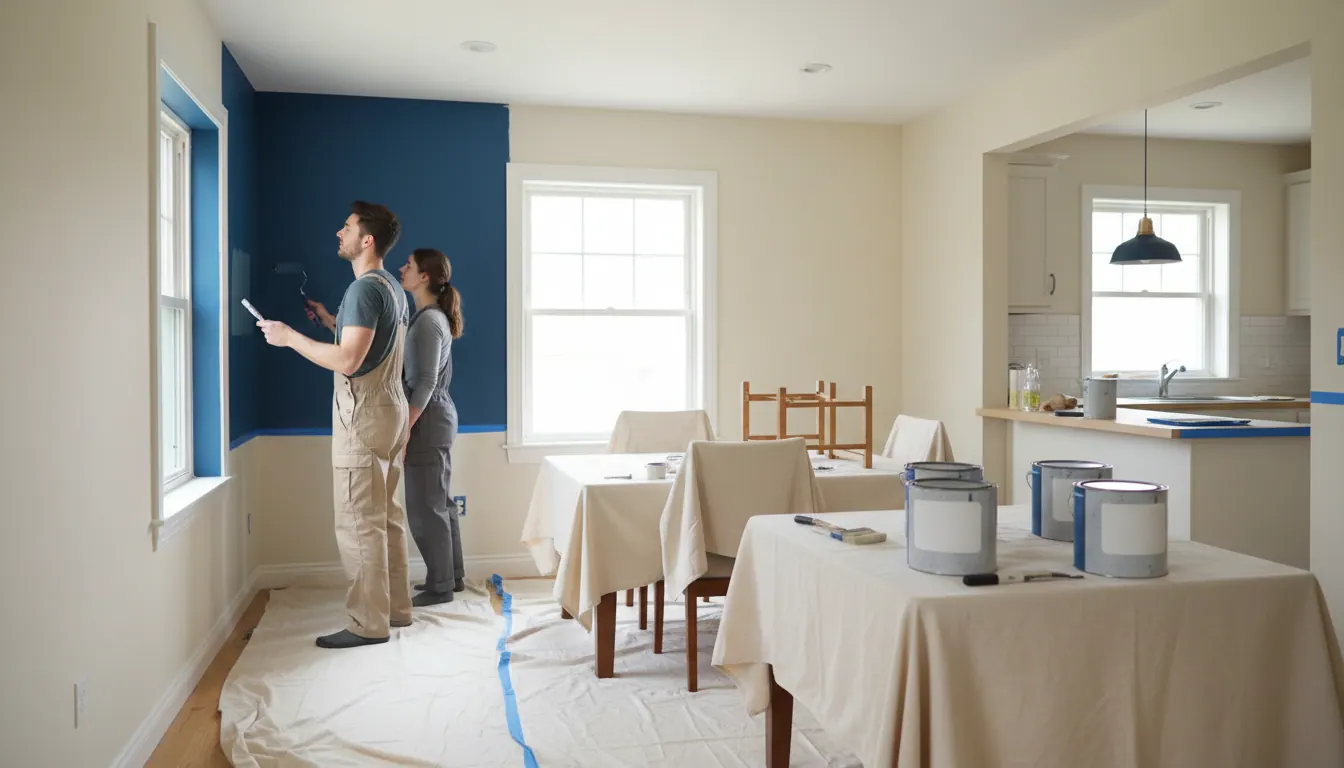
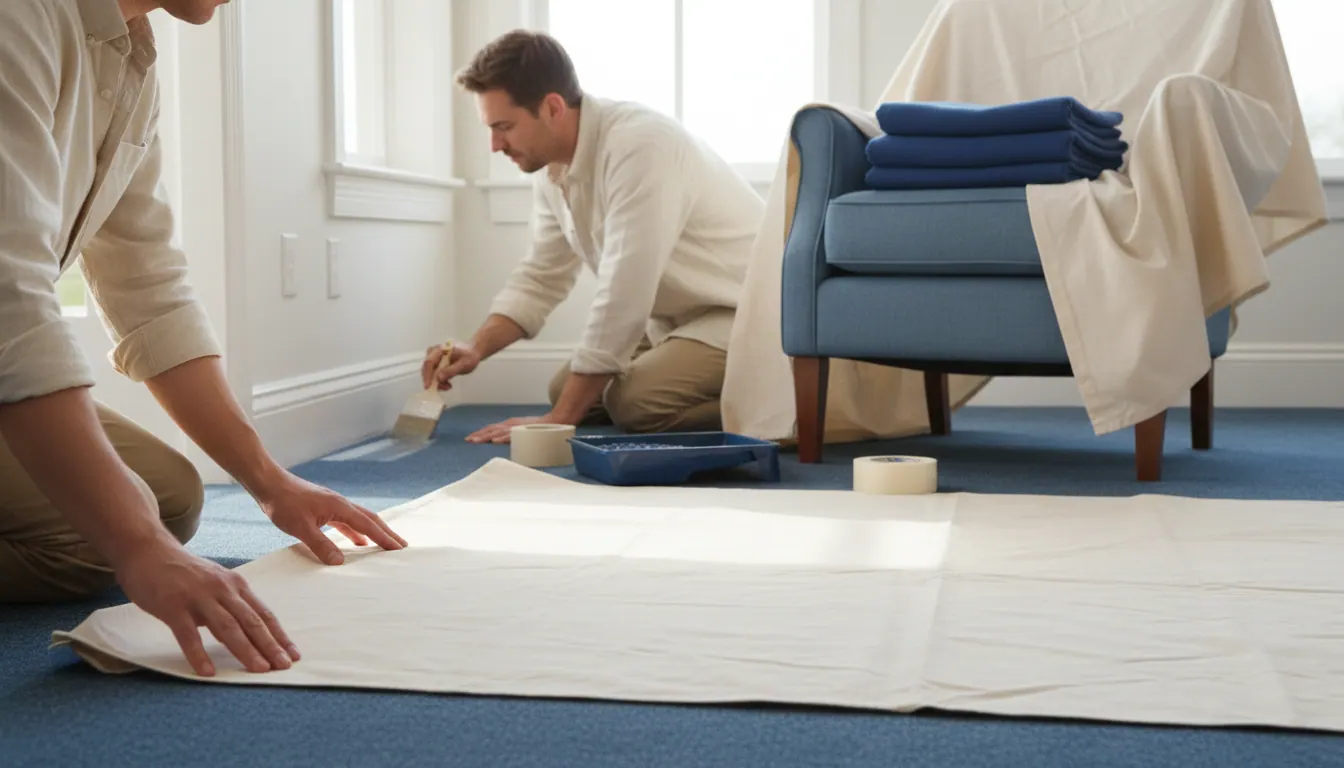
- Mask adjacent surfaces. We sheet floors and carpets and mask the wall edges carefully. Gloss on a carpet is not a good look.
- Apply an undercoat where needed. If we're going from a dark colour to light, or painting bare wood, an undercoat is essential. Skipping it is a false economy.
Only once all of that is done do we start applying the finish coat. And we'll usually apply two, because one coat of gloss rarely gives you the depth of finish that makes the job look genuinely professional.
What a Real Customer Noticed
Louise, one of our customers in Newark, had us in to refresh and gloss the woodwork in her living room and hall, stairs and landing. Her words sum up what we aim for on every job:
"Thank you for doing a great job of refreshing and glossing the woodwork in the living room and hall/stairs/landing. Work done in no time, with no splashes or damage to floor and carpets. Very efficient service, done by a thoroughly nice chap. More rooms to follow!"
, Louise Ellison
The "no splashes or damage to floor and carpets" part matters a lot to us. It's not something you should have to worry about, but we know from talking to homeowners across Newark and Balderton and Fernwood that it's exactly what they do worry about before letting someone into their home. Sheeting down properly and working neatly isn't a bonus extra. It's just how the job should be done.
The hall, stairs and landing is one of the trickiest runs of woodwork in any house, partly because of the access involved. If you're curious about what painting that area looks like in practice, our article on painting above the stairs goes into some detail.
Oil-Based or Water-Based Gloss?
This question comes up a lot. Traditional oil-based gloss gives a very hard, high-sheen finish and has been the standard for decades. It's durable and looks the part. The downsides are the strong smell, longer drying times and the need for white spirit to clean brushes.
Water-based (or acrylic) gloss has improved enormously in recent years. It dries faster, has very little odour, and cleans up with water. The finish is slightly less hard than oil-based, but for most interior woodwork it's more than adequate, and it's what we use in most occupied homes because it's far less disruptive.
For period properties in places like Coddington or Hawton where the woodwork is original and the homeowner wants a very traditional finish, we'll sometimes use oil-based. We'll always talk through the options before we start.
Hall, Stairs and Landing: The Longest Run
If you're doing a whole-house refresh, the hall, stairs and landing usually involves the most woodwork by a long stretch. You've got the stair strings and balusters, the newel posts, the handrail, the skirting on every landing level, and all the door frames leading off it. In a typical Newark semi or terrace, that's a full day's work on its own, sometimes more.
It's also the most visible part of the house. It's what you see when you walk through the front door. Getting it right sets the tone for everything else.
The access can be tricky too, particularly above the stairwell. We use the right equipment for the job rather than improvising, which makes a difference both to safety and to the quality of finish on the higher sections.
Skirting Boards: The Detail That Gets Noticed
Skirting boards are low down and easy to ignore, but they're what gives a room its finished look. Scuffed, chipped or yellowing skirtings make even freshly painted walls look a bit neglected.
A lot of the skirting boards we see in Newark homes have had years of emulsion accidentally brushed onto them from previous decorating jobs. Before we gloss, we'll sand that back. It's one of those prep steps that takes time but makes a visible difference to the final result.
In homes with original Victorian or Edwardian skirtings, particularly in the older streets around Newark town centre or in villages like Elston and Averham, we take extra care. Wide, deep-profile skirtings are worth preserving properly rather than just slapping a coat of paint over.
Doors and Door Frames
Doors get touched hundreds of times a day. The paint around the handle and the edges takes a real battering. If you're glossing door frames as part of a wider redecoration, it's worth considering whether the doors themselves need attention too. A freshly glossed frame next to a door that's scuffed and tired will only highlight the difference.
We'll assess each door individually. Some just need a light sand and a fresh coat. Others, particularly older painted doors that have had many layers built up over the years, may need more thorough preparation to get a clean finish.
If you're also repainting the walls in the same room, it's worth reading our piece on painting your lounge to understand how we approach combining wall and woodwork painting in a single visit.
What to Expect on the Day
We'll confirm a start time and we'll be there. We'll bring everything we need, sheet down before we start, and keep dust and disruption to a minimum.
Gloss needs time to dry between coats, so depending on the scope of the job, we may need more than one day. We'll be clear about that upfront so you can plan around it. We won't rush the drying time to get finished faster. That's how you end up with a finish that marks and scratches within weeks.
At the end of each day, we'll leave the space tidy. No brushes soaking in your sink, no paint-spattered cloths left on the floor.
Frequently Asked Questions
What's the difference between a painter and a decorator?
A painter applies paint. A decorator does that too, but also handles preparation work, wallpaper hanging, filling and making good, and the kind of finishing details (like careful woodwork glossing) that require a trained eye and a steady hand. Most interior woodwork jobs need a decorator's approach, not just someone who can hold a brush. We cover this in more detail in our article on the difference between a painter and a decorator.
How long does it take to gloss the woodwork in a typical Newark home?
It depends on how much woodwork there is and what condition it's in. A single room with skirting boards, a door and a window frame might take half a day once preparation is included. A hall, stairs and landing run in a typical Newark terrace is usually a full day, sometimes two. We'll give you a realistic timeframe when we come to look at the job.
Do I need to move furniture before you arrive?
For woodwork jobs, usually not much. We work around furniture and sheet everything down. For skirting boards specifically, it helps if items sitting against the walls can be moved slightly, but we can often manage around them if that's not practical. Just let us know the situation when you get in touch.
Can you gloss woodwork while also painting the walls in the same room?
Yes, and it often makes sense to do both together. We'll paint the walls first, let them dry, then cut in and gloss the woodwork so the two finishes sit cleanly against each other. Doing them separately on different visits can actually make the cutting-in harder, not easier.
Get in Touch
If your woodwork is looking tired and you'd like a clean, lasting finish, we'd be glad to come and take a look. We cover Newark-on-Trent, Balderton, Farndon, Coddington, Fernwood, Winthorpe, Collingham, Hawton, Elston, Averham, Kelham and the surrounding area.
Call us on 07845 176906 and we'll arrange a time to visit that suits you.